
Why Cover Letters Still Matter
Volume 12

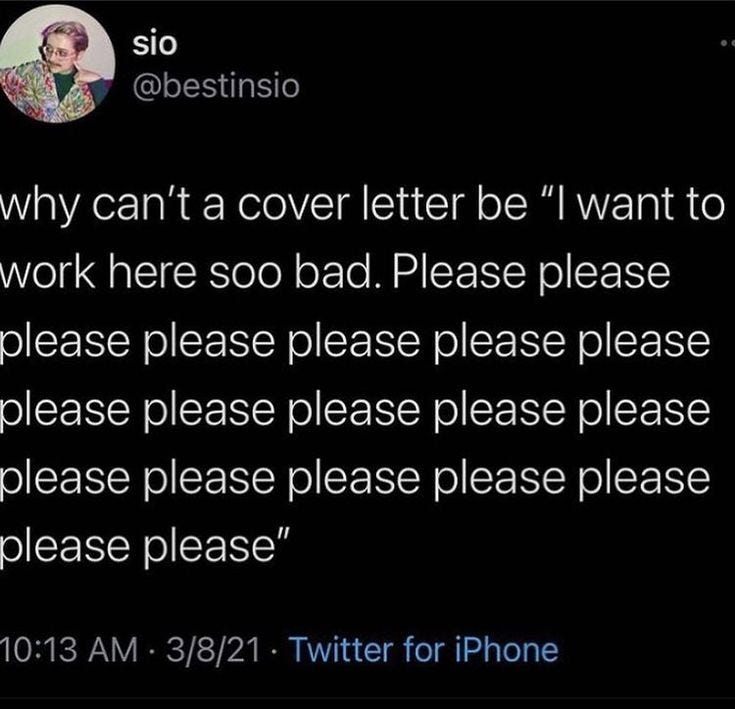
If there is one thing that will one day start a civil war in the world of HR, recruiting, and career coaching, it's the subject of cover letters. Some people love ‘em, some people hate ‘em, and no one is in the middle.
While many organizations don’t require them anymore, I'm firmly on team “pro cover letter.” I know they don't always get read. I know they are a pain to write. Even worse, I know bad cover letters can be really hard to read. So I get why some think they are worse than death.
But here's the thing. They do sometimes get read. And they have a very useful purpose to help tell a story that your resume alone can't do, especially if you are a career switcher.
But the most important benefit of a cover letter is it forces you to articulate why you are worthy of an interview. Even if it never gets read, you've done some key preparation for an interview question you know will be coming down the road: why are you a good fit for this role?
So when you are faced with an organization that wants a cover letter, how can you make your cover letter as impactful as possible? Here are three ways:
Use intelligence: No, not artificial intelligence, your own earned intelligence. Talk to people at the firm, do research beyond just visiting their website, or listen to an interview with the CEO. Integrate these observations into your argument for why you are a great fit for this role.
Be specific: In a world of generic AI word salad, your specificity and story telling will differentiate you from the army of those who took the path of least resistance. This approach will go a long way towards helping your reader understand how your prior experience can be beneficial in a new role.
Remember the goal: The goal of your resume and cover letter is not to get the job, it's only to get an interview. There are lots of reasons you could do great at the job; pick your top 3 and focus on those. Later, in the interview, you can go into more depth.
At the end of the day, a good cover letter isn’t just about convincing a hiring manager—it’s about helping you get clear on why you’re the right fit. Even if no one reads it, the work you put in will make you sharper and more confident when it’s time to tell your story in the interview.
Image by @bestinsio
As an executive search consultant, I hope this doesn’t come across as too blunt, but for executives, resumes really don’t matter much anymore. I haven’t looked at one in over three years, and none of my colleagues spend time reading them either. It’s just not where we focus our attention these days.